


I think this one needs to start with an explanation of the title itself.
It is currently 10:11 pm where I live. I have started the dishwasher, taken my daily pills from my pill organizer, brushed my teeth, and done my skincare routine. I just jumped into bed and as I began winding down for the day, this title popped into my head.
For those not familiar with the Indian education system, JEE is a competitive standardized test that most Indian students interested in STEM careers take right after high school to get admitted into some of the best STEM programs in the country.1 Jee in hindi means ‘to live’.
Lately, when I find myself in these late-night, post-skincare, contemplative moods, I often wonder how much of my life this far was dictated by the tug-of-war between the two. And also, who won?
Thanks for reading From Scratch! The posts are free but your subscription helps me!
the first choice
I’m not going to belabor the multitude of reasons why it was decided that I would be good at a scientific career. To put it simply - 1. I had reasonable grades, 2. I generally had an aptitude for science and math, 3. I demonstrated a genuine interest. But there were other ways my life could have gone.
When I was 13 I read The Diary of a Young Girl by Anne Frank, and promptly started my own diary. I wrote a lot. Daily. Sometimes several times a day. Over the years I collected many diaries and they all had different names, none of which I can remember now. At some point, my diary entries evolved into poetry. One day, I plucked up the courage to share my poetry with my favorite English teacher. She liked it so much, she interrupted her “regularly scheduled programming” to read it out to the class. As she read, I noticed her wiping a tear from the corner of her eye??!!! Teenage me had basically delivered the equivalent of a TED talk at this point.
Anyway, she was convinced I had a future as a writer. She tried to encourage this - she gave me books from her personal collection, books I was probably too young to fully comprehend,2 and had 1-1 discussions with me about them. She encouraged me to share more poems and gave me real, honest feedback.
Two years later, when the time came to choose a specialization (Science, Commerce or Arts) I chose Science. And I took the diaries with me. Nobody forced me. It was the sensible career move - I was good at it, and I genuinely enjoyed it.
the rat marathon
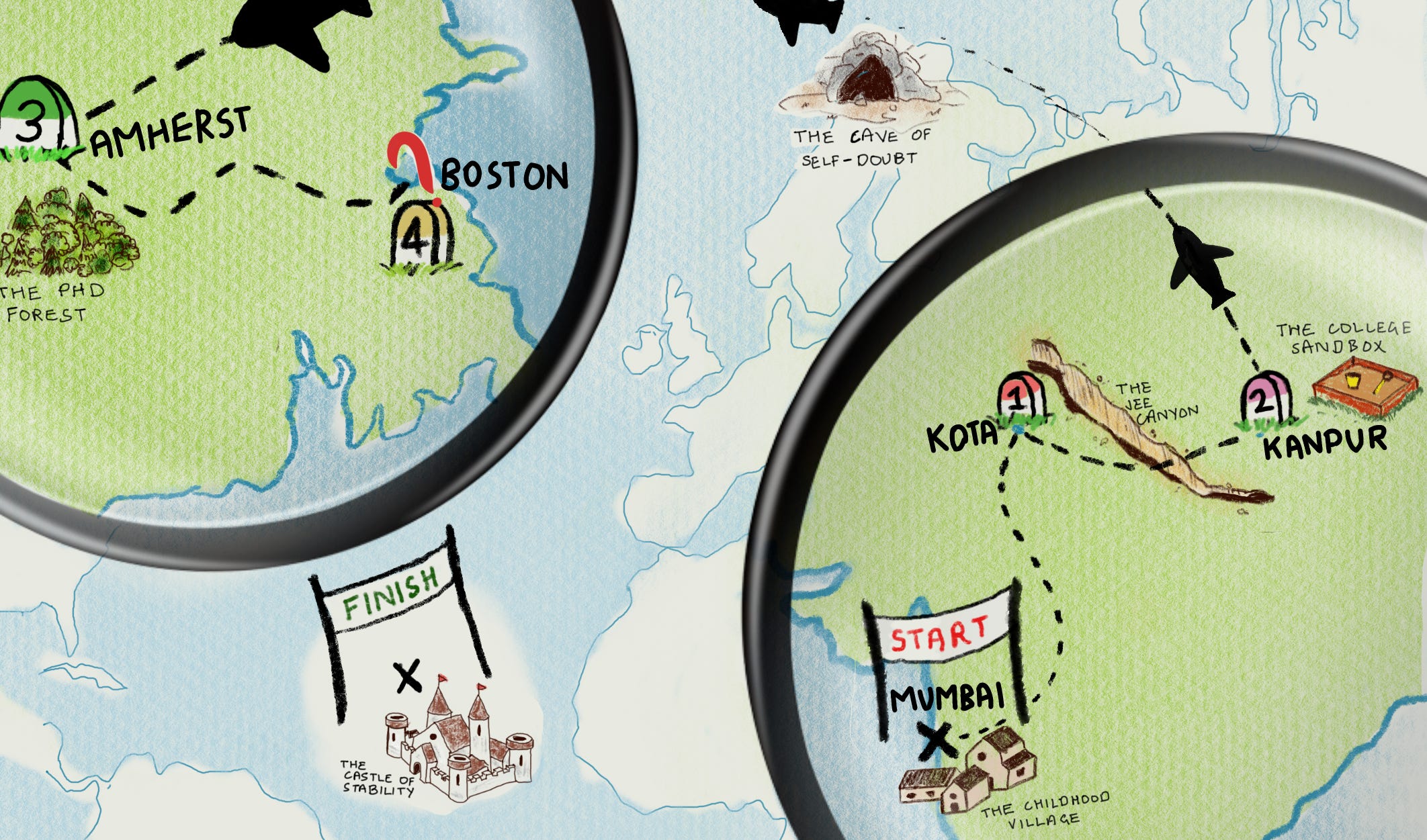
This put me on the fast track for a lifetime of running towards a finish line I couldn’t see, before I even understood what I was really doing.
For starters, I went to Kota.3 I enrolled in a two-year intensive program with the sole purpose of preparing for JEE - a competitive exam that was taken by 5,00,000 students the year I applied with a selection rate of 2%. I attempted the exam twice in two consecutive years - failed once, passed the second time. I moved to Kanpur to get a Bachelor of Science in Chemistry at the Indian Institute of Technology, Kanpur. During orientation week, I learned about the many opportunities I had to finally jee. As is true for many people, college became my sandbox - a place I truly found myself.
And what I ultimately found was a scientist who wanted a PhD. So i stressed about grades, did research for credit, spent and managed to secure a funded summer research internship in Germany.4 I studied for GRE and applied to several graduate programs. I got into 1.
I moved to Amherst, Massachusetts to do a PhD in Chemistry in 2016. I made a very calculated decision of who I want to work with based on my interest, the interest of the people that were willing to hire me, and most importantly the lab vibes.5 I went through the rigmarole of a PhD - classes, TA, quals, lab work. But I also got some extraordinary opportunities - I spent two weeks in Brazil learning about colloids, I became part of a band and we played at the holiday party in December 2019, and I got a cat! When I was finally let into lab after 5 months of COVID lockdown, I was told to start planning my graduation. It was scary but it was time.
Somehow, this was the most productive year of my PhD - I published several papers, networked and presented at a national conference, and landed a postdoc with someone who’s work I really admired.
I graduated.


I moved to Boston to start my postdoc. I was in a lab of about a hundred people and I felt lost. But the funny thing about a PhD is that you learn how to learn. It took me a year to find my voice but I found it eventually. I got to work on some interesting projects - one of them involved growing meat in the lab. I taught a college class on Fermentation and took my students to a kombucha brewery.
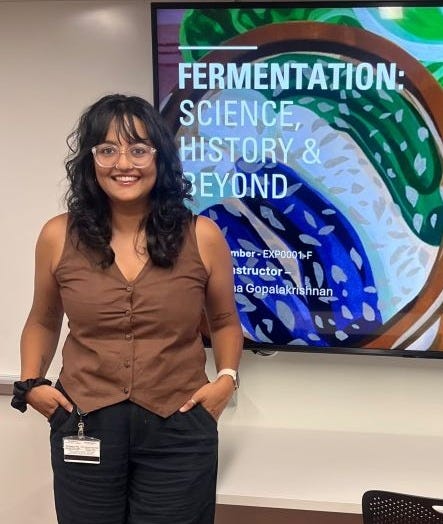
When the time came to move on, I decided that I really wanted to be a Professor - running my own lab, teaching classes, mentoring students, living the dream. I have gone through two cycles of Faculty applications and am still waiting for the outcome of that particular race. That story is for another day.
jeena, mid-race
And so that brings me here - 17 years and many miles later - supposedly close to the end, but finish line nowhere in sight, wondering what this whole race was even about.
As I reflect though, I do think I learned a lot about myself.
I learned that I do really love science - because I kept choosing it over and over again.
When I gave my first practice JEE test in Kota with thousands of other students who were all “good at science”, I realized that being good meant nothing. It was a harsh lesson for a 15 year old - it broke my confidence. I also learned to persevere. I learned to set realistic goals, devise study plans for getting there, and became my own nagging parent - ‘get off the phone, stop chit-chatting, go to bed’. I had my very first encounter with sexism, when a teacher made an example out of me for solving a physics problem the boys in class couldn’t solve. I also found friendships in strong, independent women that have lasted my whole lifetime.
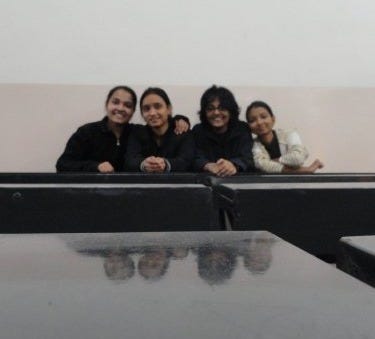
When I was in college, I explored many interests - I sang on stage for the first time, I debated competitively, and made board gaming a personality trait.
In my second year, I took an online course on Nanotechnology, and was fascinated - what do you mean nano-gold is red?
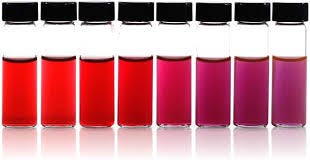
I sought out an opportunity to work at a cleanroom facility on campus, the ones where you actually make Nanomaterials. The Director of the facility told me that he will be “watching me closely” because he just could not accept that an undergrad was actually, truly interested in research. I learned to bite my tongue and smile. “Sir, I really just want the opportunity to learn. I am willing to do whatever training is needed, and be very careful in lab”
Four years in college gave me a lifetime of gains - a degree for one thing, but also the unique experience of singing Coldplay to a live audience, an unending love for strategy board games, the ability to debate my way out of anything, and another group of lifetime friends. Oh, did I mention this is where I met my future husband?


But I came to the hard realization that there will always be people that will judge me for things besides my science - my gender, my age, my grades, where I went to school, who I worked with. Despite all the emphasis on objectivity in science, this system is still built of people. And people are biased.
But this was a fight I was willing to fight.
During my PhD I found my true calling. While most people enjoyed the bench work and the “doing” of the science, I realized my favorite part was “telling the story.” This is where my two interests of writing and science converged. I took great joy in writing out my science, explaining the data, making visually appealing figures, and stitching a story around the work that would highlight its implications. I found my creative expression in science. I also found the joy in telling the story of my science to the people outside of it. I participated in a 3-Minute thesis competition where I had to present the story of my thesis in three minutes! I spoke to high school students about doing science as an Indian Woman and saw the same glimmer of wonder in their eyes, I once had in mine.
I got to mentor many students, some undergraduate women like I once was, and instead of being the person that sowed the seeds of self-doubt, I tried to be the person that built up their confidence. When I was in a position to influence the careers of others, it was important for me to make the climb easier for them than it was for me.
At the very least, my students were never made to feel like the equipment in the lab was more important than their learning.
pulling back the curtain
For the longest time, I thought stability was something that came at the end of this path—like a reward for sticking it out. Do well in school, get into a good college, do a PhD, then a postdoc, and eventually you arrive at a place where you have a comfortable paycheck, a dream job, and happiness. That was stability.
But at every stage, I was actively choosing uncertainty over stability. I could have chosen to not do JEE, and go to one of the several good engineering and science programs in India and still made it to where I am. Many did. I could have chosen to apply for a high-paying job straight out of college. I didn’t even sit for on-campus placements. That was a choice. At the end of grad school, I chose a postdoc over the many industry options I could have applied to that were relevant to the skills I acquired during my PhD. I made these choices knowing about the other options because I wanted to reach the end of the path I had drawn for myself. And I stand by all of those choices, and would probably make them again.
Now I’m starting to realize that there is no end to sticking it out for something more.
A career in science can be meaningful and intellectually generous in ways that are hard to explain to anyone outside it. It gives you the freedom to follow a question just because it’s stimulating. But it can get isolating. When the people around you start making choices different to yours and seem happier, seem stable, you start to question if you’ll ever find that pot of gold that you were promised when you chose to do science. The truth is that there is no single end and no massive pots of gold. There are however, several opportunities to choose.
If I could go back and talk to my 15-year-old self - who naively thought the choice between science and writing was simple - I would tell her to stop listening to others about what the future might look like, and instead choose whatever makes her happy
And then I would tell her to trust herself to choose again. And again.
the elusive finish line
So this is where I find myself now. Seventeen years in, still moving forward, but no longer convinced there is a finish line waiting for me somewhere up ahead.
For a long time, I thought the goal was to reach it—to become a professor, to run my own lab, to arrive at some version of success that would make all of this make sense in hindsight. And maybe that is still something I want. I’m still in the middle of that process, still waiting to see how that particular race plays out.
But lately, I’ve been asking a slightly different question - not “where does this end?” but “what kind of life am I building while it doesn’t?”
Just this once, I think I’m going to draw the finish line here and live for a change.
Qualifying in JEE is the only way to get admitted into an IIT (Indian Institute of Technology. Your All India Rank (AIR) combined with the popularity of the discipline determines what you major in.
One of the books she gave me to read was Train to Pakistan by Yashwant Singh.
For the uninitiated, think of Kota not as a city but as a high-efficiency machine for churning out JEE ranks. Of course, nothing guarantees how you perform but studying at these “coaching centers” improved your chances to 16% instead of 2%.
Back when that was still a possibility by cold-emailing a random stranger in Europe. I was given a fat paycheck of 500 euros each month (but my rent was covered, so it actually wasn’t bad).
This is actually more important than you’d think. You don’t want to spend the next 5-6 years hating your daily life.


