

the science behind the tastemaker
and our evolutionary obsession with flavor-maxing


As an Indian kid who grew up in the 90s and 2000s, there’s one food obsession we all shared: Maggi. Maggi is a pack of instant noodles but it is also so much more. Through each phase of my life, Maggi has held a special place in my heart. When I was a child, Maggi was the Sunday breakfast that my sister and I fought over - neither of us trusted the other to portion it out fairly. As a college student it was sustenance during all-nighters, and now as a 30-something adult it’s a cheat-meal, a nostalgia-fueled craving that I try very hard not to indulge in. I don’t know what kids these days grow up eating, but I would be hard-pressed to find one Indian person my age that wasn’t obsessed with Maggi at some point of their lives - if this is you, come find me! We should talk.
But when you think about it, Maggi is a curiously un-Indian dish for an entire generation of Indians to obsess over - it’s noodles, a preparation of wheat with East Asian influences, made by a Swiss Seasoning Manufacturer. And yet, nothing has gone as viral in the subcontinent, as this pack of instant noodles that promises to feed your screaming children within two minutes! The reason - the tastemaker, the silver foil seasoning packet that comes with every pack of Maggi instant noodles. I know people who will unabashedly eat the seasoning packet straight - poured right into their mouths - without a second thought about the cake of plain yellow noodles they have left behind. In fact, at one point in the early 2000s Maggi released a product that was just the seasoning packet minus the noodles, in an attempt to serve the consumer that was habituated to adding it to everything, from boiled eggs on toast, to a cup of homemade dal.
the secret ingredient of a successful snack
To the untrained eye, the ingredients list of the Maggi tastemaker reads pretty innocuous - hydrolyzed groundnut protein, sugar, salt, onion powder, garlic powder, chili powder, coriander, turmeric, some acidifying and stabilizing agents, and food color. However, hiding in plain sight lies the secret of human evolution - the quest for glutamates.
Glutamate is the deprotonated form of glutamic acid, one of the 20 amino acids that make up all proteins in the human body. When you consume proteins in the form of eggs, meat, dairy etc. your digestive system breaks down these proteins into its building blocks, amino acids. From these, the amino acids are absorbed into the blood stream and supplied to every cell in the body where they are reassembled into the different proteins your body needs. In the case of glutamic acid, some of it is reserved by the body, deprotonated, and sent to the brain, where neurons use it to perform essential brain functions like memory and learning. Glutamate is why you are currently reading this post and are able to understand the key function of glutamate!
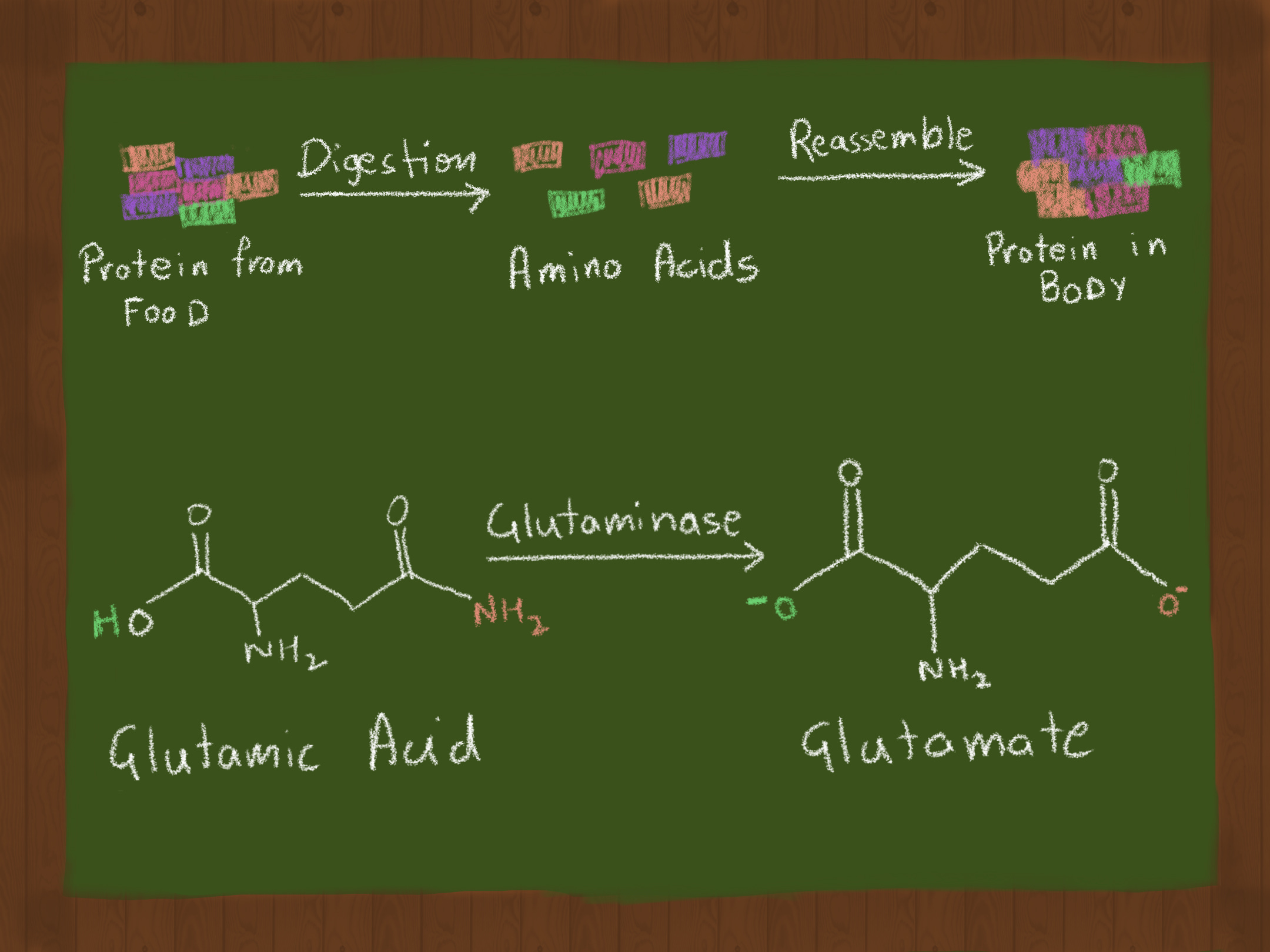
It should therefore, come as no surprise to you, that humans are programmed to crave and seek glutamates in our diet, evolutionarily. For one thing, food that is rich in glutamates is likely rich in protein, an essential macronutrient for your body. More importantly, food that already has the deprotonated, broken down form of glutamates is an efficient and direct source of energy requiring minimal digestion, meaning your body does not have to take the time and energy to break it down. So when you smell that glutamate rich food, are you really surprised that it makes you salivate?
In fact, this very sense of salivating and mouthwatering is what is now commonly accepted as Umami: the fifth taste. Umami is a word loaned to the English language by the Japanese and literally translates to “delicious taste.” In 1908 Japanese chemist Kikunae Ikeda identified this taste and attributed it to the presence of glutamic acid in food. Ikeda then went on and founded a rather small, unknown company by the name of Ajinomoto to mass-produce the world’s first umami seasoning, mono-sodium glutamate (MSG). However, the Japanese people had been producing umami seasoning for centuries prior in the form of soy sauce, miso, and dashi (Japan truly does live in the future) - they just didn’t have a name for it until Ikeda’s discovery of umami. This fifth taste would continue to be debated for another 90 years when scientists in University of Miami would finally discover glutamate receptors in the tongue, finally sealing the fate of umami as the fifth taste.
the umami food hack
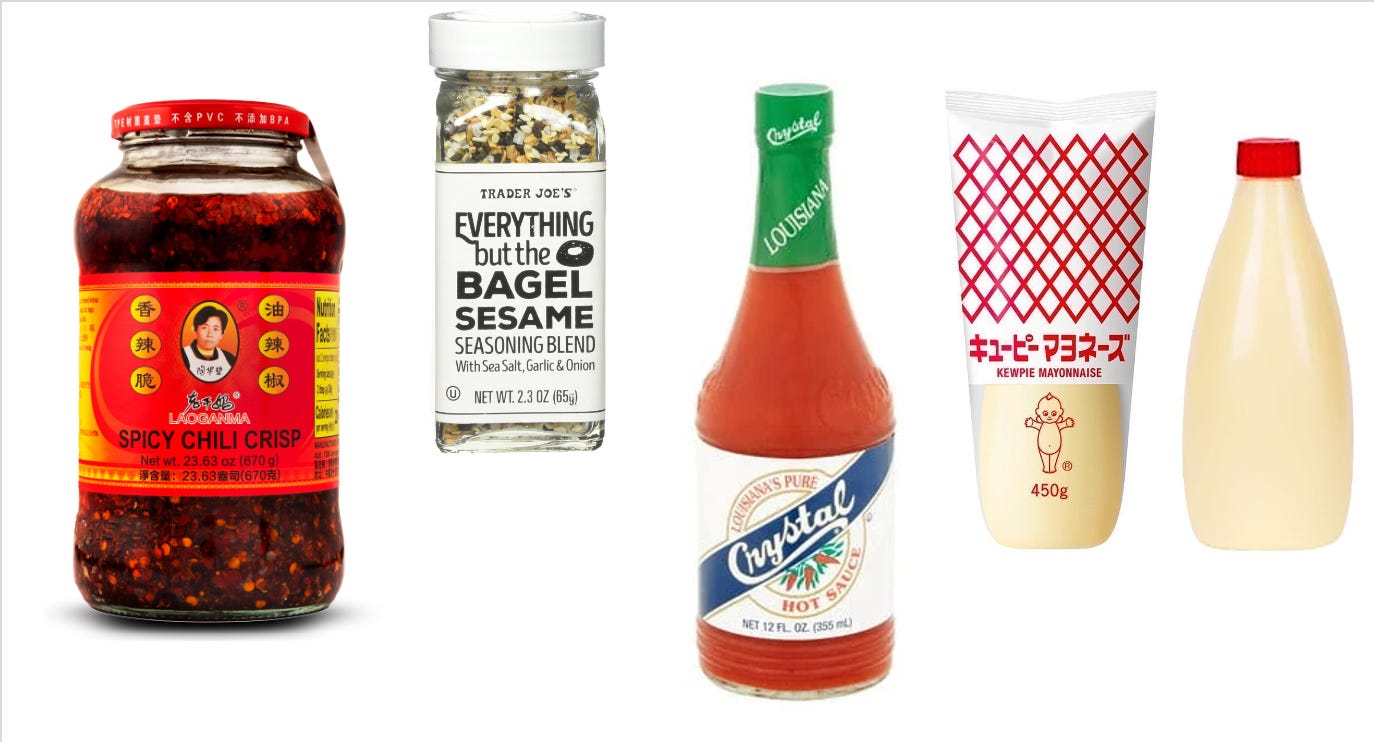
The fact of the matter is, it's your biological prerogative to seek out umami-rich food. Whether you like it or not, you've been chasing that savory satisfaction your entire life. Ketchup, anchovies, capers, mustard, parmesan cheese, pickles, achaar, kimchi—the list is endless. I asked my friends to name their favorite condiments (pictured below), and nearly all of them included some form of glutamate. It’s not always labeled as MSG; more often, it hides behind euphemisms - hydrolyzed vegetable protein, fermented yeast extract, hydrolyzed groundnut protein, and so on.
In fact, in 1886—twenty-five years before the discovery of monosodium glutamate—Julius Maggi was already producing the first acid-hydrolyzed vegetable protein. That innovation became the key ingredient in the tastemaker that would capture the minds (and mouths) of an entire nation, myself included.
But MSG’s story doesn’t stop at instant noodles. It's a widely used flavor enhancer across processed foods: the chips in your pantry, the frozen pizza in your freezer, the Crunchwrap Supreme from the Taco Bell drive-thru. Nearly everything is spiked with just enough glutamate to make your taste receptors sing! And when the health complications arising from this cheap, ultra-processed foods caught up with us we started blaming ingredients that sound strange and unnatural, like monosodium glutamate, instead of focusing on the real issue.
The problem with industrial food production is not MSG, but the low nutritional value of these foods. When your primoridial senses get a whiff of the MSG-rich tastemaker, your body thinks it’s receiving a nutritionally dense food rich in proteins and micronutrients. However, what you are eating is ultra-processed carbohydrates, copius amounts of salt and fat, and a pinch of relatively harmless MSG. In fact, most big food corporations have found a way to hack your senses by flavor-maxing their foods while spending literal pennies in production. The result is an over-fed, yet malnourished generation of humans.
my solution
I have been seeing a lot of these videos lately of gym bros who claim to have found the hack to minimize cravings while eating plain boiled chicken and rice. I don’t know about you but that is my version of hell. In fact, since I have been old enough to understand that Maggi is not a healthy meal, I have also been inundated with diet culture. There’s paleo, low carb, low fat, atkins, raw vegan, you name it. Each more hellish sounding than the previous one and each failing miserably to stop that craving.
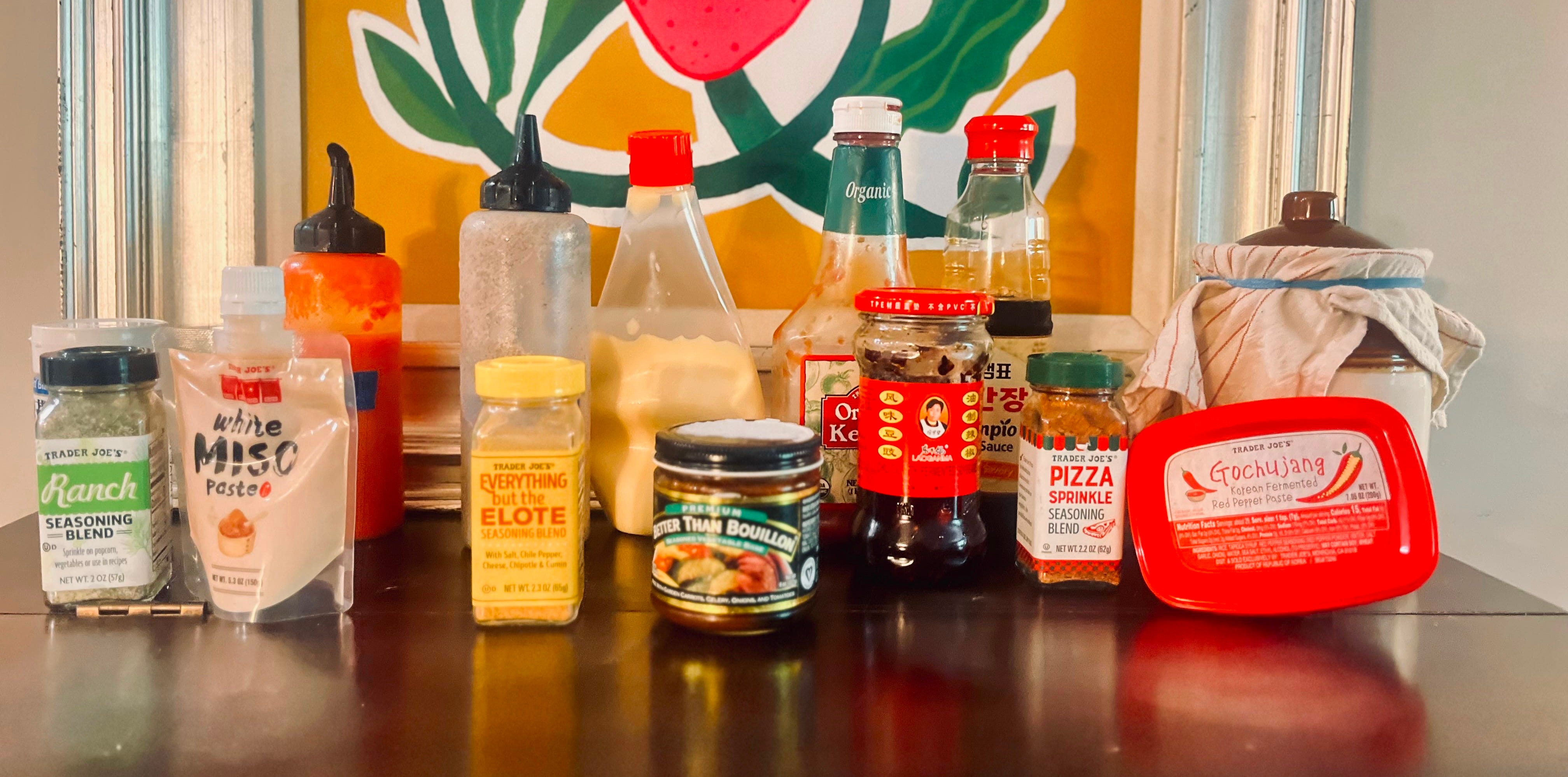
Over time, and with some self-education about food chemistry, I have come to realize that cravings are not the problem, but the symptom. The sheer joy I feel when eating good food, is biologically programmed. So my nutritious food doesn’t have to taste “healthy” I just have to find the umami hacks for flavor-maxing myself. Overtime I have identified my ride-or-dies, my all-time favorite condiments - some store-bought, some homemade, all mouthwateringly delicious. In no particular order this is my Hall of Fame -
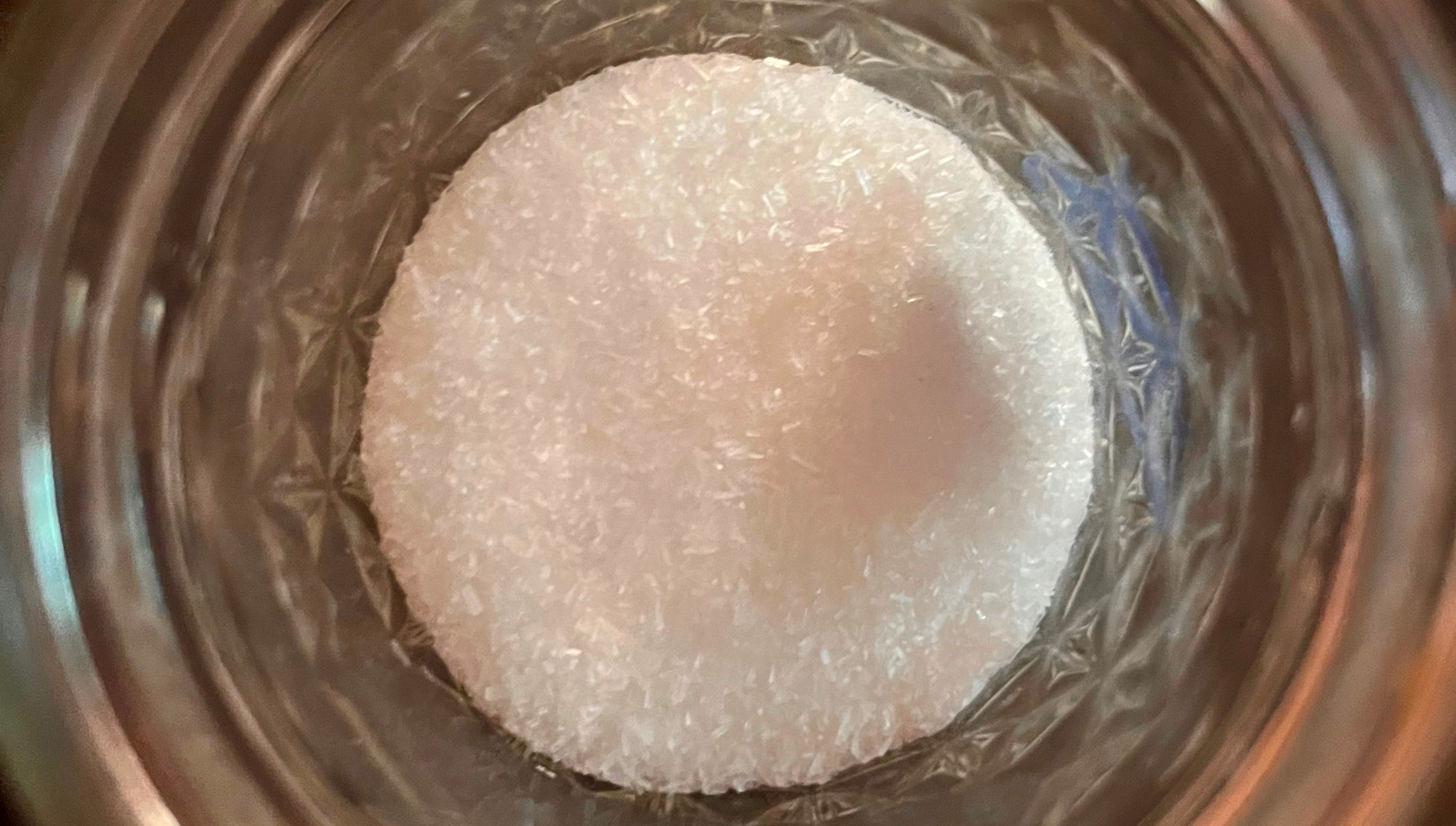
And when these don’t suffice, i also have this jar of white crystals because a pinch of MSG never hurt anybody.
I missed maggi, it's been many years since eating those instant noodels. Also for us introduction of umami was done by maggi wait oh!!! And maybe that seasoned product by maggi called "masala a magic" i think, a good read thanks
Ahh! I thought there would be more! Tell us how you do it! I’m all in.