

an Onam brunch
a new take on traditions

One of the hardest parts of living abroad, is watching celebratory posts roll in on Instagram during festival season, while you sit on your desk sipping your coffee, staring at your To-Do list, and pretending to work on a sunny Friday morning. Even if said festival wasn’t something you cared about while living in India. To be very honest, I don’t have many lasting memories of celebrating Onam. Admittedly, I’m quite fuzzy on the details of the cultural significance of this festival, aside from it being a harvest festival. All I knew about Onam (until today that is), is that women in my family wear their traditional mundus,1 we decorate the entrance of our homes with a pookolam,2 we eat an Onam Sadya for lunch (a traditional vegetarian feast served on a banana leaf), and then we spend the rest of the day in bed unable to do much, until the inevitable food coma comes to pass.
So when my curated IG feed full of perfectly styled mundus and colorful sadya lunches stirred up a wave of emotions in me, that can only be described as FOMO,3 it caught me quite off guard.
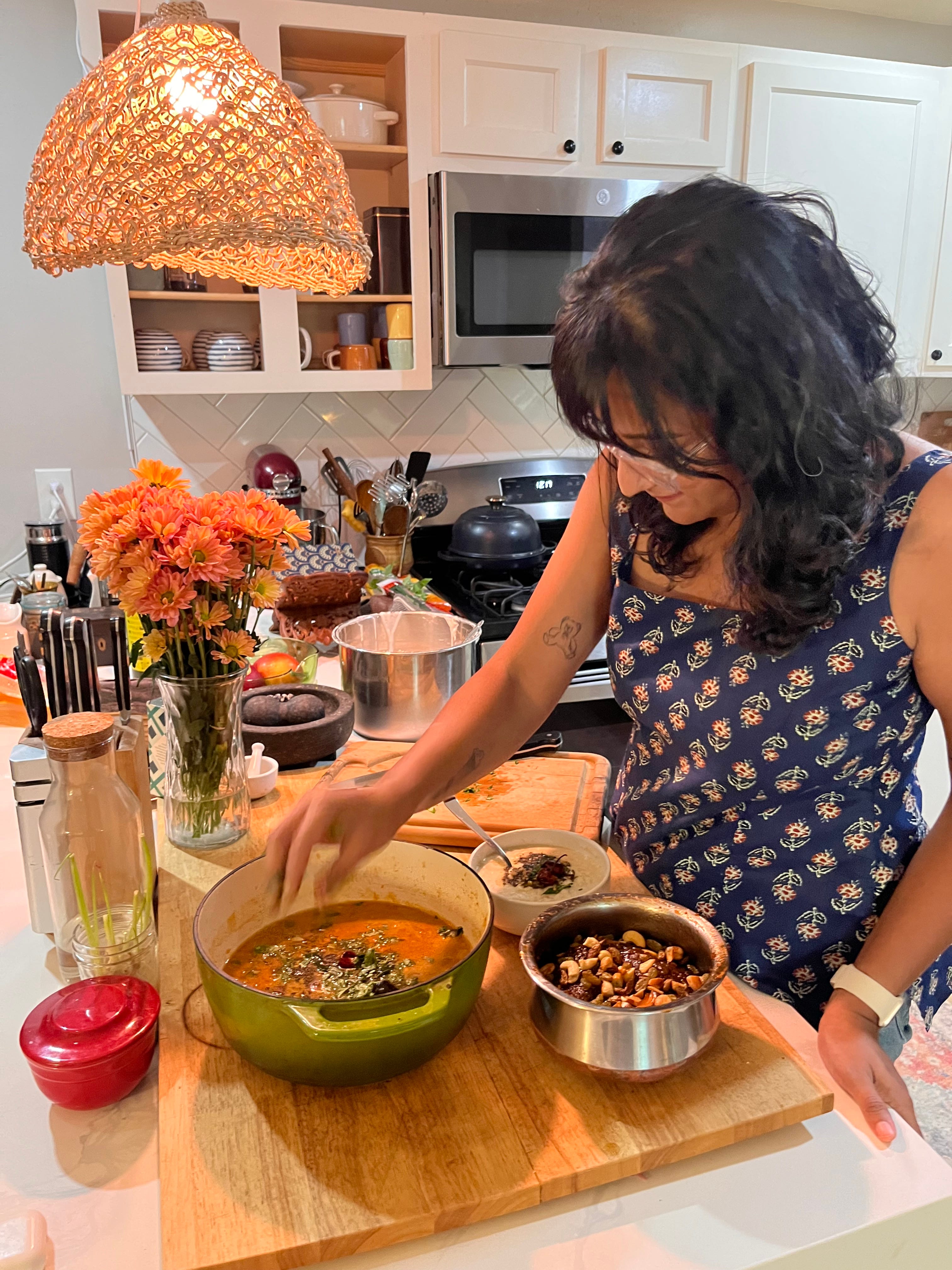
educating myself, and you, about Onam
Onam, first and foremost, is a harvest festival - it is a celebration of the annual rice harvest in Kerala, a staple diet of people from the south of India that is widely farmed in Kerala. While the origin of Onam is technically based on Hindu Mythology, in Kerala it is unanimously celebrated. Muslims and Christians who have co-existed alongside Hindus in Kerela for far longer than in the rest of India, have adapted this harvest festival into their cultural and religious contexts and celebrate it with much the same fervor. To me this is symbolic of yet another instance of food bringing people together - we’re all people first after all, and rice people at that.
Men, women, and children wear new clothes (Onakodi) on Onam day4 and feasted on the traditional Sadya lunch. This consists of a very large variety of preparations that utilize the abundant harvest like sambar and sides made with autumnal vegetables like gourds, cucumbers and pumpkins, sweet and salty fried banana chips, yogurt, daal, some sort of sweet payasam (dessert), and mounds of rice. There are atleast 9 different courses of dishes prepared and served and some extravagant establishments in Kerala are known to serve over 30 different preparations.
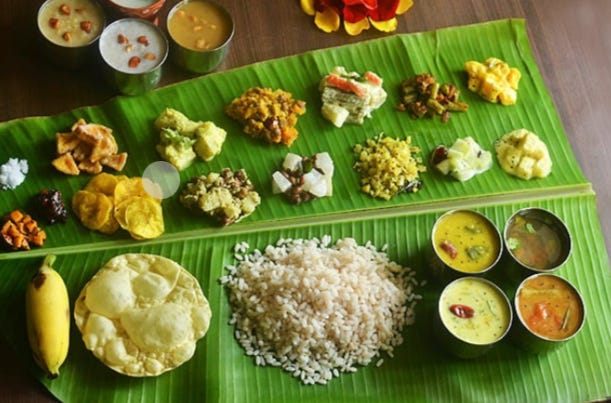
It almost seems like the goal is to devour the entire harvest in one meal - And I can respect that.
sadya meets brunchers
When I got over my FOMO, on this fateful Friday morning, my first thought was - I’m going to make myself an Onam sadya meal first thing this weekend. Once I got over the initial outburst, I realized a few things - 1. I don’t have the financial capacity or enough time in the day to cook a 9 course meal; 2. My husband and I are two people and we cannot, even if we wanted to, demolish a week’s worth of prepared meals over a single lunch, and 3. This might be controversial, I’m actually not a huge fan of several of the sadya preparations.
First of, a huge disclaimer - the rest of this post is going to be QUITE controversial for those of you that love every part of the Onam Sadya. Good for you. Will never be me. So if you’re sensing a slight confusion, or perhaps outrage at the claims I just made, and cannot for the life of you understand where this is coming from, stop here. Our friendship might not survive this. You have been warned.
Now that that’s out of the way - hear me out, I like rice and sambar as much as the next person but when you have a feast of this scale there’s bound to be favorites and well not-so favorites. So when I started to think about what parts of the sadya I did and didn’t like the list of things to prepare quickly simplified itself - I like rice, but I love preparations made out of rice batter a whole lot more, sambar is golden, but avial, olan? I’m sorry it’s just never been my thing. Not to mention buying all of those vegetables would literally burn through my grocery budget for the week, seeing as they are not local or seasonal where I currently live.
With all of that in mind, I quickly realized that my favorite, nostalgic South Indian meal is actually a traditional breakfast and not the traditional lunch. And so, for this Onam weekend, I decided to treat myself and the husband to a traditional South Indian Brunch for two with all of my favorites and none of my not-so-favorites.
Rice was still the center of each preparation, very much in the true spirit of Onam. But instead of plain cooked rice, we ate idlis made out of fermented rice batter, soaked in onion sambar and topped with coconut chutney. For drinks, we had some strawberry shrubs from last week. And lastly, for dessert I made my favorite vella payasam - rice slow cooked caramel syrup - while my Mom stayed on the phone and dictated her recipe to me as I followed verbatim. I guess that is tradition too.


traditions that evolve
As I sit here on my couch, with a full belly from my perfect Onam meal, I can’t help but reflect on the overwhelming wave of emotions that led to this satisfying meal. Why do humans hold on to our traditions? What invisible force is holding my strings, and playing me like a puppet to the point that I suddenly wanted to part of this celebration that I never cared for much before? I think the answer is simply belonging. To me, it was never about the authenticity of the sadya meal or the accuracy of my Mundu outfit (I wore a kurta for crying out loud). My reason for suddenly wanting to be a part of this celebration was to feel like I can be part of something. Even if I am thousands of miles away. Even if the food I was eating wasn’t a 9 course sadya meal served on banana leaf.
It tasted like home. And isn’t that truly what festivals are all about? Finding a sense of home, no matter where we are. Even if it’s just over a simple breakfast of idlis.
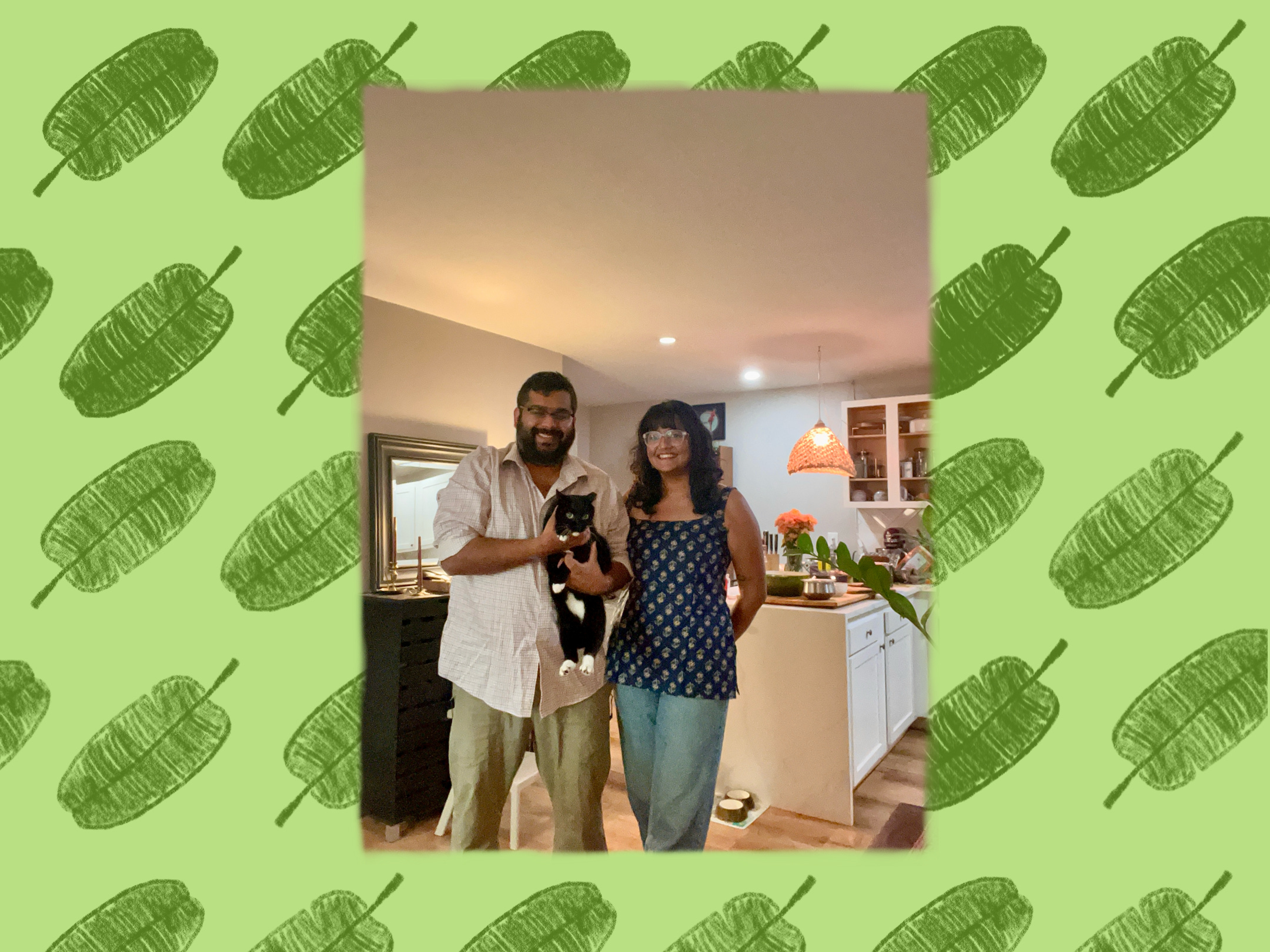
happy Onam from us to you all! thank you for being here!
White cotton sarees with gold borders popular in Kerala
A rangoli or artwork made to resemble a carpet, in this case made with flower petals. Typically made outside the entrance of one’s home as a symbol of welcoming good fortune.
FOMO = Fear Of Missing Out
It doesn’t necessarily have to be the white mundus I have come to associate with the festival, but likely historically would have been the traditional “new clothes” people bought.
Much relate to the feeling of wanting to participate in festivals. This happens to me during Ganpati every year - I suddenly want modak at all costs even though I never think about it for the rest of the year.
What you did prepare looks very good. 😋